1.18.2013

Jeff the Great Quells an Uprising

Recently I've noticed what may be an increasing irreverence of the law. Specifically are two very different but interesting examples.

First, the uproar over the suicide of Aaron Swartz. Not the uproar about his death specifically, but the blame that Swartz supporters are levying on others. If you are unfamiliar with the Aaron Swartz story, here is an overly simplified overview. Swartz is an internet celebrity and internet/technology advocate. He (allegedly) hacked into the MIT computer network, downloaded proprietary research from JSTOR, and then freely distributed JSTOR's property on the internet. He was charged with at least 6 felonies and faced anywhere from 6 months to 35 years in jail. He committed suicide recently, and his family reports that he took such an unfortunate and permanent action because he was so distraught over the legal action pending against him. Many Aaron Swartz supporters (and lovers of the internet for that matter) are blaming Aaron's death on the legal system.

This blows me away. Apparently some people have a hard time separating their affinity from things like logic and reason. Like it or not, breaking into a private computer network and stealing property is a crime! Swartz (allegedly) broke the law! If someone broke into your company, stole your valuable property, and gave it away to strangers for free, would you not expect them to be prosecuted?

Another example comes from my home state of Oregon where a county sheriff has warned the Obama administration that he will not enforce any new gun laws or regulations that he believes violate the Second Amendment. Yes, you read that correctly, he will not enforce the law. The problem here is that it is not a sheriff's job to decide what is or isn't law. That's why they are called law enforcement, not law makers.

Our country has arguably the most fair, transparent, and civilized legal system. The people elect representatives, who create laws, enforced by the legal system, and ultimately ratified or shot down by the courts (specifically, the Supreme Court). There are fair, transparent, and civilized ways of challenging or changing the law. If society doesn't like something, they can change it. Swartz had every opportunity to a fair trial and full defense. Sheriffs and the citizens of their counties have a voice through their elected representatives and via elections.

Why do supporters of the internet and information freedom believe they get to unilaterally decide what is a crime or isn't? Would they have cared so much if Swartz wasn't an internet icon or if it were their property broken into and stolen? Why does a sheriff think he can ignore the law of the land and interpret the constitution on his own?

What happened to the rule of law and civility? This is a scary trend and I hope it does not continue.

1.14.2013

Jeff the Great Ponders His DNA

For Christmas, I got my wife a personal genetic test for health and ancestry from a company called 23andMe. Essentially, a DNA test. After spitting in a tube and mailing it in, the company tells you all sorts of cool things like where your recent ancestors come from, where your deep genealogical roots are in the ancient world, what the chances are that you'll pass on more than 40 inherited conditions, and your chances at developing more than 250 different diseases. You also have the opportunity to contribute to important research around things like genetic diseases or even the discovery of what gene causes back hair. All that for the price of $99.

Pretty amazing to think about how far technology has come to deliver personal genetic analysis for only a hundred bucks. While this service offered by 23andMe is not a full gene sequencing, I'd like to offer an example of how far technology as come in such a short period of time. In 2005, a full genome sequencing for a single person cost approximately $17.5 million dollars. Just 7 years later in 2012, the cost had plummeted to just $7,500 (source: genome.gov). Similarly, the less complex genetic analysis at 23andMe has dropped in price. Starting out at $999 in 2007, the price dropped to to $299 and finally $99 in December of 2012.

So the price is right and I am ready to jump. Except, I have all these long term implication questions in my head. Not about how I'll handle learning about potentially scary health things or surprising ancestry, I'm fine with all that. I am worried about the privacy and legal implications.

If I become a customer of 23andMe, will I be putting my life, freedom, and/or privacy at risk in the future? Could a court subpoena my genetic information from 23andMe and use it against me in a trial? Could a health insurance company ever get their hands on my personally identifiable information and use it to effect my rates? When required to disclose health information, would I be legally and morally obligated to disclose information from the 23andMe results? Could the optionally stored saliva sample, with personally identifiable information, be handed over to anyone else in the future?

My mind is running with all sorts of crazy thoughts! Increased insurance premiums, conviction of a crime, etc, etc! Could I be denied the opportunity to be President of the United States in the future because my health isn't up to par, or because my recent ancestors were discovered to be from outside the country? Crazy thoughts, I know....but who knows what the future holds, right?

So, I'd love to hear your thoughts or if you have participated in 23andMe, your experience. If you are a legal professional, I am especially interested in your opinion.

12.25.2012

"Support Entrepreneurs" commands Jeff the Great

Since starting my company and volunteering for Portland Startup Weekend, I have had the opportunity to be around hundreds, if not thousands, of both budding and experienced entrepreneurs. During casual conversation and formal presentations, entrepreneurs regularly share with others what they are building.  They say "I'm building an Instagram for pet photos" or "My company brings together artists and art collectors," sometimes even "I'm making the next Facebook."

One of my biggest pet peeves is when a person listening to a new business idea says "but someone has already built that!" At a recent Startup Weekend, one of the participants was excitedly pitching their new product to an official mentor who responded by saying "Company XYZ has already built that" before walking away and writing off the entrepreneur and their abilities.

Doing this is one of the most naive and unhelpful things you can say to an entrepreneur, and I am asking you to stop. Now.

Thank god Larry and Sergey didn't listen to the naysayers that likely said "but Yahoo already does that" upon hearing about Google. Thankfully, Apple didn't look at Blackberry and say "Well, someone has already made a smartphone, so we don't have to." There are 1 billion people around the world that wouldn't be connecting with friends, family, and strangers online if Mark Zuckerberg decided that the world didn't need Facebook because MySpace already existed.

Simply the existence of a product or service means nothing. Is it the best it can be? Does it serve all potential customers? These high level questions lead us into more detailed ones. Is it priced right? Do consumers want more....or less? Does it serve all the consumers it could?

Additionally, the entrepreneur you are talking to probably already knows about XYZ company that you so quickly jump to say has already built what they just pitched. You aren't telling them anything they don't already know. If someone said they wanted to start a new car company, do you think you'd need to tell them that Ford already exists?

So here is what I want you to do, here are the helpful things you can say. First, be honest and don't grin fuck them (tell them what you really think). Instead of saying that a competitor exists, approach the topic from another angle by saying "so how are you going to differentiate your product from company XYZ?" Ask what company XYZ has done right, and what company XYZ has done wrong. Ask what consumers in the industry as asking for, and ask how the entrepreneur will deliver it.

Simply stating that a competitor exists is an insult to the entrepreneurs intelligence and shows your inability to have an intelligent business conversation. However, if you approach the conversation as I have suggested above, you'll not only look more intelligent yourself, you'll be providing value to the entrepreneur through your questions. You'll give them a chance to show that they have researched the competition and that they have thought about how they'll effectively compete.

11.24.2012

Jeff the Great Points Out the Obvious

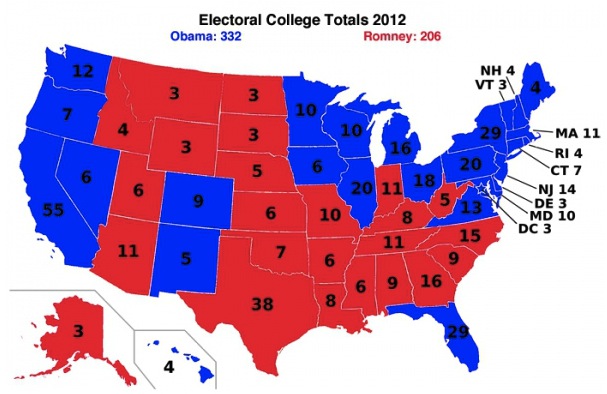
Was thinking about the presidential election we just wrapped up and how we've become a country of red and blue states. I realized that, like most republicans, Romney got his votes in the south and midwest. Then, I started wondering how the economies of those states looked. The results were not surprising, but still eye-opening.

Of the 10 states with the lowest GDP per capita, 8 of them voted Republican in the 2012 presidential campaign. Similarly, of the 10 highest GDP per capita states, 8 of them voted Democratic.

Interpret how you please, but to me it says that GOP policies do not work for the average American. Furthermore, it appears that voters in the poorest states tend to vote against their own interests. Here is the data:

State 
2010 GDP

per capita
2012

Blue/Red
Mississippi $32,967 Red
Idaho $34,250 Red
West Virginia $35,053 Red
South Carolina $35,717 Red
New Mexico $35,952 Blue
Alabama $36,333 Red
Arkansas $36,483 Red
Montana $37,200 Red
Kentucky $37,535 Red
Michigan $37,616 Blue
Tennessee $39,730 Red
Florida $40,106 Blue
Maine $40,923 Blue
Missouri $41,117 Red
Indiana $41,169 Red
Georgia $41,711 Red
Utah $41,750 Red
Ohio $42,035 Blue
Oklahoma $42,237 Red
North Carolina $42,884 Red
Vermont $44,000 Blue
Wisconsin $44,105 Blue
Kansas $44,310 Red
Oregon $44,447 Blue
Rhode Island $45,000 Blue
Pennsylvania $45,323 Blue
Texas $45,940 Red
Nevada $47,222 Blue
New Hampshire $47,385 Blue
Louisiana $47,467 Red
North Dakota $47,714 Red
Iowa $49,067 Blue
Hawaii $49,214 Blue
Nebraska $49,778 Red
South Dakota $49,875 Red
Illinois $50,328 Blue
Minnesota $50,396 Blue
Maryland $51,724 Blue
California $51,914 Blue
Colorado $51,940 Blue
Washington $52,403 Blue
Virginia $53,463 Blue
New Jersey $56,477 Blue
New York $57,423 Blue
Massachusetts $58,108 Blue
Wyoming $63,667 Red
Connecticut $64,833 Blue
Alaska $65,143 Red
Delaware $69,667 Blue
D. C. $174,500 Blue

5.12.2012

Jeff the Great Condemns the Youth of the Nation

When I was a kid, I worked hard and played hard. I wasn't more than 8 years old when I started my first entrepreneurial venture: selling beverages to golfers as they crossed the street from one hole to the next. When I wasn't hustling to make my own money, I was active doing things like skateboarding or riding my bike miles and miles on any given day.

It seems things are different for kids these days. I say that because of two very different, but eye-opening things I have noticed lately.

The first example comes from the fact that I am so incredibly busy these days, the last thing I want to do during one of my few weekend hours at home is mow the lawn. So I figured I'd hire a neighborhood kid to do it. Certainly, in my neighborhood full of kids, one of them has started a lawn mowing business. Right? Nope, I can't find a single kid doing anything to make money by working for themselves.

The second thing I noticed is the proliferation of motorized scooters. Kids of all ages are zipping around the sidewalks and streets on electric motor powered scooters. I no longer see them riding bikes, skateboarding, or even pushing an original Razer scooter. Nope, these lazy slackers are letting a motor do all the work while they stand on the board, with a spoiled grin on their face.

I know I sound like an incredibly old, grumpy man, but what has happened to the youth of our nation?